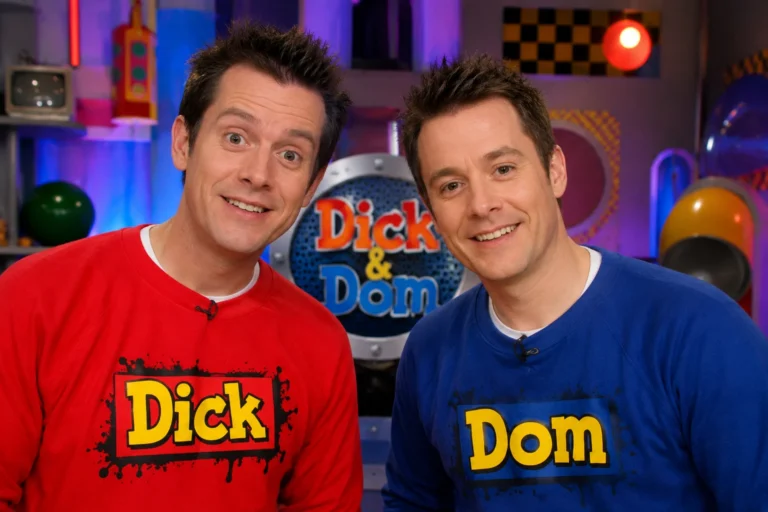
For an entire generation of British viewers, Dick and Dom represented pure childhood chaos, unpredictable comedy, and unforgettable Saturday morning television. The presenting pair, made up of Richard McCourt and Dominic Wood, became household names in the early 2000s through their hugely popular BBC children’s show, Dick and Dom in da Bungalow.
Known for their energetic humor, messy games, audience interaction, and catchphrases, the duo helped reshape children’s entertainment in the UK. Their influence extended far beyond television, inspiring live tours, radio projects, festival appearances, and nostalgic reunions years after their original rise to fame.
This article explores the story behind Dick and Dom, their television success, cultural impact, career evolution, and why audiences still remember them so fondly today.
Who Are Dick and Dom? A Short Biography
| Detail | Information |
|---|---|
| Stage Names | Dick and Dom |
| Real Names | Richard McCourt and Dominic Wood |
| Nationality | British |
| Profession | Television Presenters, Entertainers, Comedians |
| Years Active | 1990s–present |
| Famous For | Dick and Dom in da Bungalow |
| Main Television Network | BBC |
| Source of Income | Television, live shows, radio, entertainment projects |
| Official Website | Dick and Dom Official Website |
The Origins of Dick and Dom
How Richard McCourt and Dominic Wood Met
Richard McCourt and Dominic Wood both worked in children’s entertainment before becoming famous as a duo. They reportedly met while working in television production and quickly realized they shared a similar sense of humor and performance style.
Their chemistry became obvious almost immediately. Unlike polished presenters who followed strict scripts, Dick and Dom thrived on spontaneity, improvisation, and playful chaos.
This natural comedic partnership eventually became the foundation for one of the most memorable children’s television brands in modern British entertainment.
Early Television Work
Before their biggest breakthrough, the pair worked on several smaller BBC children’s projects. These early experiences helped them develop the fast-paced and interactive presenting style that later defined their careers.
Children’s television during the late 1990s and early 2000s was highly competitive, with broadcasters searching for fresh formats that felt energetic and relatable to younger audiences.
Dick and Dom stood out because they treated children as active participants rather than passive viewers. Their style felt unpredictable, rebellious, and refreshingly unscripted compared with more traditional family programming.
The Success of Dick and Dom in da Bungalow
A Revolutionary Kids’ TV Format
The duo became nationally famous through Dick and Dom in da Bungalow, which aired on the BBC from 2002 to 2006.
The show combined live comedy, games, celebrity guests, audience participation, slapstick humor, and total unpredictability. Children in the studio often competed in bizarre challenges while the hosts encouraged loud, chaotic fun.
Unlike many polished entertainment shows, Dick and Dom in da Bungalow embraced messiness and spontaneity. This created an atmosphere that felt authentic and exciting for younger audiences.
Bogies Became a Cultural Phenomenon
One of the show’s most iconic segments was the game “Bogies,” where contestants whispered or shouted the word “bogies” in increasingly inappropriate public locations.
The game quickly became a cultural phenomenon among schoolchildren across the UK. Although controversial to some adults, it became one of the most recognizable comedy moments associated with the duo.
Its popularity demonstrated how strongly the presenters connected with children’s sense of humor and playful rebellion.
Why the Show Connected With Audiences
Part of the appeal of Dick and Dom was that they seemed genuinely unpredictable. Viewers never knew what might happen next during a live episode.
Their humor balanced childish silliness with enough cleverness to entertain parents watching alongside their children. This crossover appeal helped broaden the show’s popularity beyond its intended age group.
Many millennials who grew up watching the program now view it as one of the defining parts of early-2000s British childhood culture.
Life After the Bungalow Era
Expanding Beyond Children’s TV
After the success of Dick and Dom in da Bungalow, the pair expanded into other television projects, stage performances, and radio work.
They hosted programs including Are You Smarter than a 10 Year Old? and appeared in various entertainment specials and festival events.
While many children’s presenters struggle to transition beyond one successful show, Dick and Dom managed to maintain public affection through their adaptable comedic style and strong partnership.
Festival and Live Entertainment Success
In recent years, the duo found new popularity through live comedy appearances and music festival performances aimed at nostalgic adult audiences.
Their DJ sets and live entertainment shows often attract millennials who grew up watching them on television. These performances blend childhood nostalgia with modern comedy and audience interaction.
This second phase of their career highlights the long-term cultural connection audiences still feel toward them decades later.
Dick and Dom’s Impact on British Pop Culture
Redefining Children’s Entertainment
Before Dick and Dom, many children’s television programs followed more structured and educational formats. Their success helped prove that chaotic, audience-driven comedy could become mainstream family entertainment.
The duo’s influence can still be seen in later British children’s programs that embraced sillier humor, improvisation, and direct audience participation.
Their style also reflected a changing media landscape where younger viewers increasingly preferred authenticity and spontaneity over overly scripted content.
A Shared Nostalgia for Millennials
Today, discussions about early-2000s British culture almost always include Dick and Dom. Social media frequently revives clips, catchphrases, and memorable moments from their shows.
For many viewers, their programs represent a nostalgic reminder of Saturday mornings spent watching television before streaming platforms dominated entertainment habits.
This nostalgia factor has helped keep the duo culturally relevant long after the original show ended.
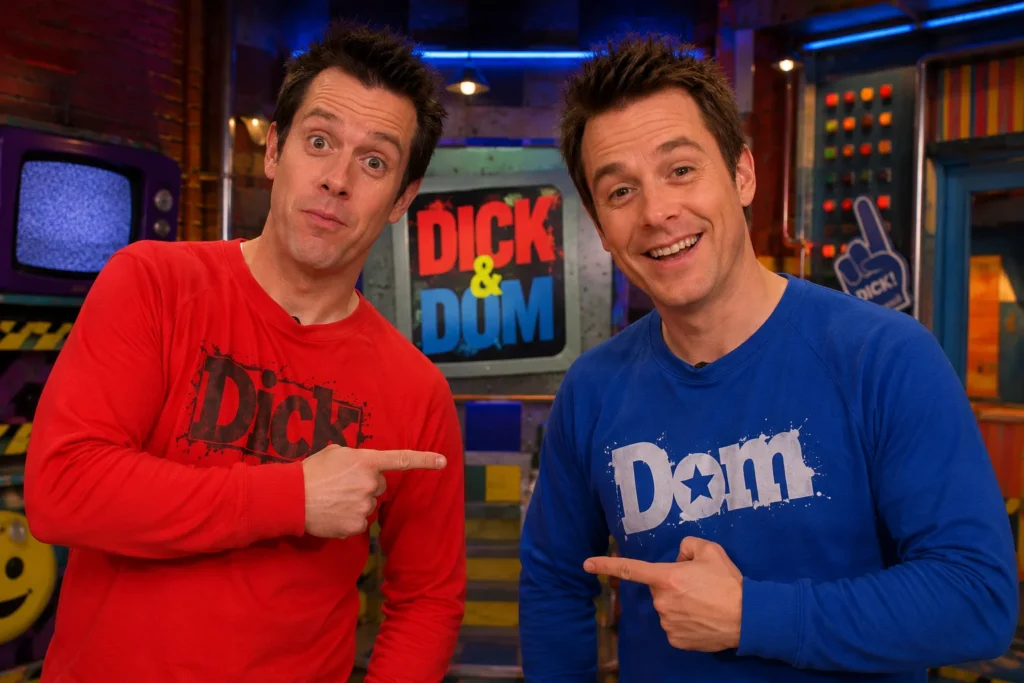
The Secret Behind Their Lasting Popularity
Genuine Friendship and Chemistry
One reason Dick and Dom remained successful for so long is the authenticity of their friendship. Their on-screen chemistry never appeared forced or manufactured.
Audiences could sense that they genuinely enjoyed making each other laugh, which made their performances feel natural rather than scripted.
That dynamic became central to their brand and helped separate them from many short-lived television partnerships.
Balancing Chaos With Warmth
Although their comedy often seemed wildly chaotic, there was usually an underlying sense of warmth and inclusivity in their shows.
Children watching at home felt involved in the fun rather than excluded from it. The presenters encouraged participation, imagination, and silliness without taking themselves too seriously.
This balance between anarchic humor and friendly energy helped make them beloved figures rather than simply controversial entertainers.
Modern Career and Continued Relevance
Staying Connected to Audiences
Even after decades in entertainment, Dick and Dom continue appearing at festivals, television events, podcasts, and live shows.
Their ability to adapt while preserving the playful energy that originally made them famous has helped them remain recognizable across multiple generations.
Unlike many nostalgic acts that rely solely on past success, the duo actively engage with modern audiences and evolving entertainment formats.
Influence on New Creators
Many younger British presenters and online entertainers cite early-2000s children’s television as an influence, particularly the fast-paced comedy style popularized by Dick and Dom.
The duo’s willingness to embrace absurdity and audience interaction anticipated many trends later seen on YouTube, TikTok, and live-stream entertainment culture.
In some ways, their chaotic presentation style was ahead of its time.
Frequently Asked Questions
Q: Who are Dick and Dom?
A: Dick and Dom are a British entertainment duo made up of Richard McCourt and Dominic Wood. They became famous through the BBC children’s television show Dick and Dom in da Bungalow.
Q: What was Dick and Dom in da Bungalow?
A: Dick and Dom in da Bungalow was a popular BBC children’s program that aired from 2002 to 2006. The show featured comedy sketches, games, celebrity guests, and audience participation.
Q: Are Dick and Dom still working together?
A: Yes. Richard McCourt and Dominic Wood still perform together at live events, festivals, television appearances, and entertainment shows.
Q: Why were Dick and Dom so popular?
A: Their popularity came from their chaotic humor, strong chemistry, unpredictable games, and ability to connect naturally with younger audiences while still entertaining adults.
Q: What is the “Bogies” game?
A: “Bogies” was one of the duo’s most famous comedy segments, where contestants shouted the word “bogies” in public places while trying not to get caught or embarrassed.
Conclusion
Dick and Dom became far more than ordinary children’s television presenters during the early 2000s. Through wild humor, audience participation, and unforgettable catchphrases, they created a style of entertainment that shaped childhood memories for an entire generation of British viewers.
Their success came not only from comedy but also from authenticity. Richard McCourt and Dominic Wood brought genuine friendship, spontaneity, and energy to every performance, making audiences feel part of the fun rather than simply watching from a distance.