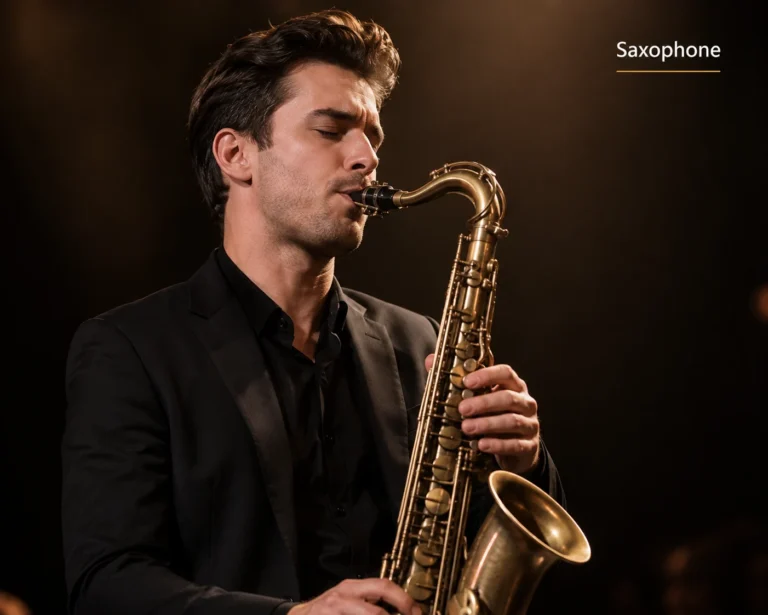
The saxophone is one of the most expressive and recognizable musical instruments ever created. Whether it’s the smooth melodies of jazz, the energetic sounds of rock music, the elegance of classical performances, or the soulful tones found in blues, the saxophone has the unique ability to connect with listeners emotionally.
For more than 175 years, this remarkable instrument has influenced countless genres and inspired generations of musicians. Its versatility allows it to perform gentle ballads, powerful solos, and complex orchestral passages with equal effectiveness. Today, the saxophone remains one of the most popular instruments for beginners and professionals alike.
In this comprehensive guide, you’ll learn about the saxophone’s history, how it works, the different types available, its role in modern music, famous players, and practical advice for beginners.
What Is a Saxophon?
The saxophon is a woodwind instrument invented in the 19th century by Belgian instrument maker Adolphe Sax. Although it is usually made of brass, it belongs to the woodwind family because it produces sound through a vibrating reed attached to a mouthpiece.
Unlike many traditional woodwind instruments, the saxophone combines the flexibility of a clarinet with the power of brass instruments. This combination creates a distinctive sound that can be both warm and aggressive, depending on the player’s technique.
One reason for the instrument’s popularity is its remarkable ability to express emotion. A skilled saxophonist can make the instrument sound joyful, romantic, energetic, melancholic, or dramatic with subtle changes in tone and phrasing.
The History of the Saxophon
The Invention of the Saxophon
The saxophon was invented by Adolphe Sax in the early 1840s. Sax wanted to create an instrument that would bridge the gap between woodwinds and brass instruments in military bands and orchestras.
His goal was ambitious. Traditional brass instruments had power but lacked flexibility, while woodwinds offered agility but sometimes struggled with projection. Sax believed he could create an instrument that combined the strengths of both families.
In 1846, he officially patented the saxophone, introducing a completely new instrument to the musical world.
Early Reception
Although innovative, the saxophone did not immediately become a mainstream orchestral instrument. Many classical composers were hesitant to adopt it because it was relatively new.
However, military bands quickly embraced the instrument due to its powerful sound and ability to blend with other instruments. Over time, composers began recognizing its unique tonal qualities.
By the late 19th century, the saxophon had started appearing in concert bands, chamber ensembles, and selected orchestral works.
The Jazz Revolution
The true rise of the saxophon occurred during the early 20th century with the growth of jazz music.
Jazz musicians discovered that the instrument was ideal for improvisation and personal expression. Its ability to bend notes, create vibrato, and produce a wide range of dynamics made it perfect for the developing jazz style.
During the Swing Era and Bebop period, the saxophon became one of the defining sounds of American music. Many of the greatest jazz legends built their careers around the instrument.
How a Saxophon Works
The Mouthpiece and Reed
The mouthpiece is where the musician blows air into the instrument. Attached to the mouthpiece is a thin piece of cane called a reed.
When the player blows air, the reed vibrates rapidly, creating sound waves. These vibrations travel through the instrument and produce musical notes.
The quality of the reed significantly affects tone, response, and playability.
The Body and Keys
The body of the saxophon contains numerous keys and pads. These keys allow the musician to open and close tone holes, changing the length of the vibrating air column.
Different combinations of keys create different notes. This system gives the saxophone a wide range of pitches and expressive possibilities.
Sound Production
The sound produced by a saxophone depends on several factors:
- Air support
- Reed strength
- Mouthpiece design
- Finger positioning
- Player technique
This combination allows experienced musicians to develop highly personalized sounds.
Types of Saxophones
Soprano Saxophon
The soprano saxophone is one of the smallest and highest-pitched members of the saxophone family.
It often has a straight shape and produces a bright, focused tone. Because of its sensitivity and pitch demands, it is generally considered more challenging for beginners.
Soprano saxophones are commonly used in jazz, classical ensembles, and solo performances.
Alto Saxophon
The alto saxophone is the most popular saxophone in the world.
Its moderate size, comfortable finger spacing, and balanced tone make it an excellent choice for students and beginners.
Many school music programs use alto saxophones because they are easier to handle and learn than larger models.
Tenor Saxophon
The tenor saxophone produces a deeper, richer sound than the alto.
It is especially popular in jazz, blues, funk, and rock music. Many iconic saxophone solos in popular music history were performed on tenor saxophones.
The instrument’s warm tone and expressive range make it a favorite among professional musicians.
Baritone Saxophon
The baritone saxophone is significantly larger and produces powerful low notes.
Its deep voice provides harmonic support in bands and ensembles while still being capable of exciting solo performances.
Although physically demanding to play, it offers a unique and unforgettable sound.
Parts of a Saxophon
Understanding the instrument’s main components helps beginners learn proper maintenance and performance techniques.
Mouthpiece
The mouthpiece controls tone quality and response. Different mouthpieces produce different sounds, making them important for personalizing performance.
Reed
The reed vibrates when air passes through it. Reeds come in different strengths, allowing players to choose the best option for their skill level and musical style.
Ligature
The ligature secures the reed to the mouthpiece and helps ensure proper vibration.
Neck
The neck connects the mouthpiece to the body and plays a significant role in sound production.
Keys and Pads
The keys control pitch while the pads seal tone holes to ensure proper airflow.
Bell
The bell is the flared end of the instrument that helps project sound outward.
The Saxophon in Different Music Genres
Jazz Music
Jazz and saxophones are almost inseparable.
From the early days of New Orleans jazz to modern contemporary jazz, the saxophone has remained a central voice in the genre.
Its ability to improvise and express emotion makes it perfectly suited for jazz performance.

Classical Music
Although less common than in jazz, the saxophone also has a respected place in classical music.
Many composers have written concertos, chamber works, and solo pieces specifically for saxophone.
Classical saxophonists focus on precision, tone control, and technical mastery.
Rock and Pop Music
Many classic rock and pop songs feature memorable saxophone solos.
The instrument became especially prominent during the 1970s and 1980s when artists frequently incorporated brass and woodwind sections into their recordings.
Blues and Funk
The expressive qualities of the saxophone make it ideal for blues and funk music.
Its ability to growl, bend notes, and create powerful rhythmic lines contributes significantly to these genres.
Famous Saxophonists Who Changed Music
Charlie Parker
Charlie Parker revolutionized jazz through his groundbreaking bebop style.
His technical brilliance and innovative improvisations continue to influence musicians today.
John Coltrane
John Coltrane is widely considered one of the greatest saxophonists in history.
His creative exploration of harmony and spirituality transformed jazz music forever.
Sonny Rollins
Known for his powerful tone and improvisational skills, Sonny Rollins remains one of the most respected figures in jazz.
Kenny G
Kenny G helped popularize smooth jazz and became one of the best-selling instrumental artists in history.
Benefits of Learning the Saxophone
Develops Musical Skills
Learning saxophone improves rhythm, listening skills, coordination, and music theory knowledge.
Enhances Creativity
Improvisation encourages creativity and self-expression.
Builds Confidence
Performing in front of others helps develop confidence and communication skills.
Provides Lifelong Enjoyment
Many musicians continue playing the saxophone throughout their lives because it remains rewarding and enjoyable.
Beginner Tips for Learning Saxophone
Choose the Right Instrument
Most beginners start with an alto saxophone due to its manageable size and learning curve.
Practice Consistently
Daily practice is more effective than occasional long sessions.
Focus on Fundamentals
Breathing, posture, and embouchure should be mastered before attempting advanced techniques.
Take Lessons
A qualified teacher can help beginners avoid common mistakes and accelerate progress.
Frequently Asked Questions
Q: Is the saxophon difficult to learn?
A: The saxophon is generally considered one of the easier instruments for beginners because basic notes can be learned relatively quickly with regular practice.
Q: Which saxophon is best for beginners?
A: The alto saxophon is the most recommended option due to its comfortable size, affordable price, and beginner-friendly design.
Q: Why is the saxophone considered a woodwind instrument?
A: It belongs to the woodwind family because sound is produced by a vibrating reed rather than vibrating lips like brass instruments.
Q: How long does it take to learn the saxophone?
A: Most beginners can play simple melodies within a few weeks, while achieving advanced proficiency may take several years of dedicated practice.
Q: Can adults learn the saxophone?
A: Absolutely. Many adults successfully learn the saxophone and enjoy playing as a hobby or performing in community ensembles.
Conclusion
The saxophone remains one of the most beloved and influential instruments in music history. Since its invention by Adolphe Sax in the 1840s, it has become a cornerstone of jazz, classical, blues, rock, and pop music. Its rich tone, expressive capabilities, and versatility continue to attract musicians of all ages and skill levels.
Whether you’re interested in becoming a professional performer, joining a local band, or simply learning for personal enjoyment, the saxophone offers endless opportunities for musical growth and creativity. Its unique voice has captivated audiences for generations, and its popularity shows no signs of slowing down. For anyone seeking an instrument that combines emotion, power, and artistic freedom, the saxophone remains an outstanding choice.