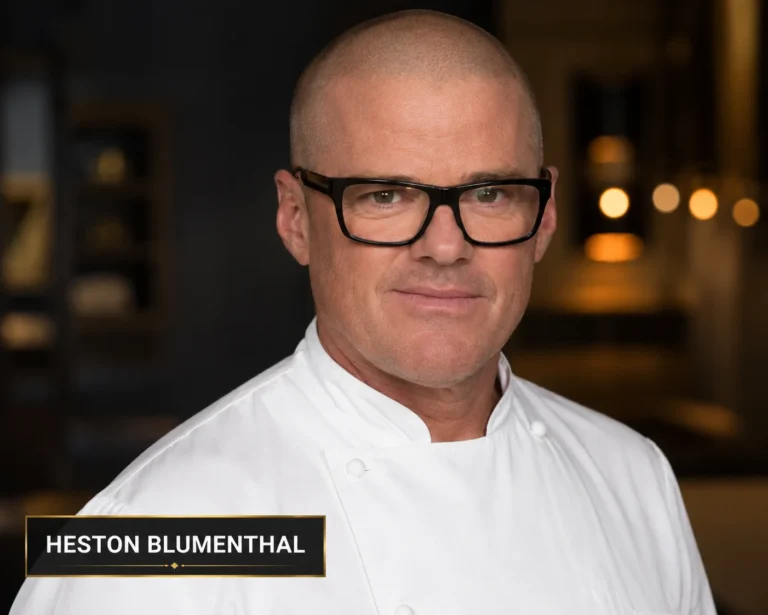
Few chefs have transformed the culinary world as dramatically as Heston Blumenthal. Known for his scientific approach to cooking, groundbreaking flavor combinations, and multisensory dining experiences, Blumenthal has become one of the most influential figures in modern gastronomy.
From creating bacon-and-egg ice cream and snail porridge to pioneering concepts such as food pairing and sensory dining, he challenged traditional ideas about how food should be prepared and experienced. His flagship restaurant, The Fat Duck, became one of the most celebrated restaurants in the world and helped establish Britain as a global culinary powerhouse.
Beyond his restaurants, Blumenthal built a successful career as a television presenter, author, and food innovator. His curiosity, creativity, and willingness to question conventional wisdom have inspired chefs and food enthusiasts around the globe.
This comprehensive biography explores Heston Blumenthal’s life, career, culinary philosophy, achievements, personal challenges, and enduring legacy.
Who Is Heston Blumenthal? A Short Biography
| Field | Information |
|---|---|
| Full Name | Heston Marc Blumenthal |
| Date of Birth | 27 May 1966 |
| Age | 60 Years (as of 2026) |
| Birthplace | Shepherd’s Bush, London, England |
| Nationality | British |
| Profession | Chef, Restaurateur, Television Personality, Author |
| Famous For | The Fat Duck |
| Years Active | 1990s–Present |
| Education | Latymer Upper School, John Hampden Grammar School |
| Signature Style | Multisensory Gastronomy, Food Science |
| Notable Restaurants | The Fat Duck, Dinner by Heston Blumenthal, The Hind’s Head |
| Awards | Multiple Michelin Stars, OBE |
| Spouse | Melanie Ceysson Blumenthal (married 2023) |
Information based on publicly available records.
Early Life and Inspiration
Growing Up in London
heston blumenthal was born on 27 May 1966 in Shepherd’s Bush, London. Raised in a family with no professional culinary background, heston blumenthal did not follow the traditional route of attending culinary school or working through prestigious kitchens at a young age.
Instead, his journey into food would emerge from personal curiosity and a fascination with how flavors and experiences affect people.
Unlike many famous chefs, Blumenthal was largely self-taught, a fact that would later contribute to his unconventional thinking.
The Meal That Changed His Life
A defining moment occurred when he was sixteen years old during a family trip to Provence, France.
There, he dined at the three-Michelin-starred restaurant L’Oustau de Baumanière. The experience profoundly affected him. He later described being captivated not only by the food but also by the atmosphere, aromas, sounds, and overall sensory experience.
This meal planted the seed that would eventually grow into a revolutionary culinary career.
Learning Without Formal Training
After leaving school, Blumenthal briefly attempted a kitchen apprenticeship but soon left and pursued other work while teaching himself classical French cooking techniques. During this period, he immersed himself in cookbooks and culinary science.
One particularly influential book was Harold McGee’s On Food and Cooking, which encouraged him to question traditional kitchen assumptions and explore the science behind cooking processes.
That philosophy would become central to his future success.
Building The Fat Duck
Opening a Small Restaurant
In 1995, Blumenthal purchased a rundown pub in Bray, Berkshire, and transformed it into a restaurant called The Fat Duck. At the beginning, heston blumenthal operation was extremely modest, staffed primarily by Blumenthal and a dishwasher.
The early years were financially difficult.
The restaurant came close to bankruptcy multiple times, forcing Blumenthal to sell personal possessions to keep the business alive.
Earning Michelin Recognition
His perseverance eventually paid off.
The Fat Duck earned:
- First Michelin star in 1999
- Second Michelin star in 2001
- Third Michelin star in 2004
The achievement made it only the third restaurant in the United Kingdom to hold three Michelin stars at the time.
These accolades established Blumenthal as one of the most exciting chefs in the world.
Becoming the World’s Best Restaurant
In 2005, The Fat Duck achieved global recognition when it was named the world’s best restaurant by The World’s 50 Best Restaurants.
The award transformed Blumenthal into an international culinary superstar.
Food lovers from around the world began traveling to Bray to experience his innovative creations firsthand.
Revolutionary Culinary Innovations
Molecular Gastronomy
Although Blumenthal has sometimes resisted the label, heston blumenthal became closely associated with molecular gastronomy.
His cooking explored the relationship between:
- Science
- Flavor
- Texture
- Temperature
- Human perception
Rather than accepting traditional techniques, he constantly experimented to discover better methods and unexpected flavor combinations.
Famous Signature Dishes
Several dishes became legendary within the culinary world.
These include:
- Snail porridge
- Bacon-and-egg ice cream
- Triple-cooked chips
- Soft-centred Scotch eggs
- Sound of the Sea
Many of these creations challenged diners’ expectations while delivering memorable flavors and experiences.
The Sound of the Sea
Perhaps his most famous multisensory creation is Sound of the Sea.
The dish is served alongside headphones playing ocean sounds while diners consume seafood presented on edible “sand.” The concept was designed to demonstrate how sound influences taste perception.
This approach helped redefine what a restaurant experience could be.
Pioneer of Food Science
Questioning Conventional Wisdom
Blumenthal’s success stemmed partly from his willingness to challenge accepted culinary beliefs.
For example, he investigated cooking temperatures, ingredient interactions, and texture development through experimentation rather than tradition.
This mindset led to numerous innovations that later became widely adopted throughout the industry.
The Food Pairing Theory
One concept strongly associated with Blumenthal is food pairing.
The theory suggests that ingredients sharing key flavor compounds are more likely to work well together. His work helped popularize the idea among chefs worldwide.
Although researchers continue to explore the theory’s limits, it remains influential in contemporary gastronomy.
Influence Beyond Restaurants
Many techniques pioneered or popularized by Blumenthal eventually reached home kitchens.
His famous triple-cooked chips, for example, became one of the most copied potato recipes in modern cooking.
His impact extended far beyond fine dining.
Expanding His Restaurant Empire
The Hind’s Head
In 2004, Blumenthal acquired The Hind’s Head, a historic pub in Bray.
Unlike The Fat Duck’s experimental cuisine, the restaurant focuses on traditional British cooking with modern refinement. It later earned Michelin recognition of its own.
Dinner by Heston Blumenthal
In 2011, he opened Dinner by Heston Blumenthal in London.
The restaurant explored historical British recipes and culinary traditions, adapting centuries-old dishes for modern diners. It quickly earned Michelin stars and international acclaim.
Many food critics regarded it as one of London’s finest restaurants.
International Expansion
Blumenthal also expanded internationally, including ventures in Australia and Dubai.
These projects introduced his culinary philosophy to global audiences while strengthening his reputation as one of the world’s leading chefs.
Television Career
Bringing Science to Mainstream Audiences
Blumenthal became a popular television personality through programs that combined cooking, science, and entertainment.
His television projects included:
- In Search of Perfection
- Heston’s Feasts
- How To Cook Like Heston
- Heston’s Fantastical Food
- Kitchen Chemistry
These shows made complex culinary concepts accessible to everyday viewers.
Educational Entertainment
Unlike traditional cooking shows, Blumenthal’s programs focused heavily on experimentation and understanding why food behaves the way it does.
This educational approach attracted audiences interested in both science and cooking.
Author and Food Writer
In addition to television, Blumenthal authored several successful cookbooks.
His publications helped document his techniques and philosophy while inspiring aspiring chefs worldwide.
Personal Life and Challenges
Life Outside the Kitchen
Despite his public profile, Blumenthal has often maintained a degree of privacy regarding personal matters.
His focus has generally remained on food, creativity, and innovation rather than celebrity culture.
Mental Health Journey
In recent years, Blumenthal publicly discussed being diagnosed with bipolar disorder following a serious mental health crisis in 2023. He has spoken openly about hospitalization, recovery, and the importance of understanding mental health challenges.
His willingness to discuss these experiences has been widely praised for helping reduce stigma around mental illness.
Continuing Creativity
Despite personal and business challenges, Blumenthal remains actively involved in culinary innovation and restaurant development. He has continued exploring new ideas while reflecting on lessons learned throughout his career.
Awards and Recognition
Michelin Success
Few chefs have accumulated as much Michelin recognition as Blumenthal.
His restaurants have collectively earned multiple Michelin stars, making him one of Britain’s most decorated culinary figures.
National Honors
Blumenthal received an OBE (Officer of the Order of the British Empire) in recognition of his contributions to British gastronomy.
This honor reflects his impact on both cuisine and national culture.
Global Influence
His work has influenced chefs across Europe, North America, Asia, and Australia.
Many modern tasting-menu experiences incorporate elements pioneered by Blumenthal and his team.
Legacy and Impact
Redefining Fine Dining
Before Blumenthal, fine dining was often centered primarily on flavor and presentation.
He expanded the concept to include psychology, memory, sound, aroma, and emotion.
This multisensory approach permanently changed the culinary landscape.
Inspiring Future Generations
Countless chefs cite Blumenthal as an inspiration.
His success demonstrated that curiosity, experimentation, and scientific thinking could coexist with creativity and artistry.
A Culinary Innovator
Whether through molecular gastronomy, food pairing, or immersive dining experiences, Blumenthal helped redefine what restaurants can achieve.
His influence continues to shape modern gastronomy around the world.
Frequently Asked Questions
Q: Who is Heston Blumenthal?
A: Heston Blumenthal is a British chef, restaurateur, television presenter, and food writer best known for creating The Fat Duck and pioneering scientific approaches to cooking.
Q: Why is Heston Blumenthal famous?
A: He is famous for innovative dishes such as bacon-and-egg ice cream, snail porridge, and multisensory dining experiences that combine science and gastronomy.
Q: How many Michelin stars has Heston Blumenthal earned?
A: His restaurants have collectively earned multiple Michelin stars, with The Fat Duck holding three Michelin stars and becoming one of the world’s most celebrated restaurants.
Q: What is The Fat Duck?
A: The Fat Duck is Heston Blumenthal’s flagship restaurant in Bray, Berkshire. It is internationally renowned for experimental cuisine and was named the world’s best restaurant in 2005.
Q: What is Heston Blumenthal doing now?
A: Blumenthal remains involved in culinary projects and restaurant operations while continuing to advocate for mental health awareness following his bipolar disorder diagnosis.
Conclusion
Heston Blumenthal stands among the most influential chefs of the modern era. Through relentless curiosity, scientific exploration, and a willingness to challenge culinary conventions, he transformed both British cuisine and international fine dining. From the rise of The Fat Duck to the global popularity of multisensory gastronomy, his contributions have reshaped how chefs think about food and how diners experience it.
His story is not simply one of culinary success but also of innovation, resilience, and lifelong learning. As new generations of chefs continue to explore the intersection of science and creativity, Heston Blumenthal’s influence remains unmistakable, securing his place as one of the most important culinary pioneers of the twenty-first century.