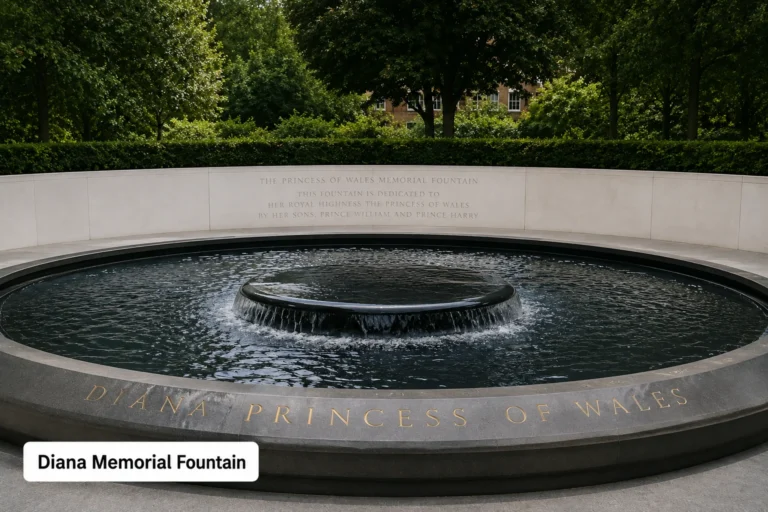
Few memorials in London capture emotion and symbolism as effectively as the Diana Memorial Fountain. Located in the heart of Hyde Park, this unique landmark was created to honor the life, compassion, and legacy of Diana, Princess of Wales. Unlike traditional statues or monuments, the fountain invites visitors to interact with flowing water and open space, reflecting the approachable and inclusive nature that made Diana beloved around the world.
Since its opening in 2004, the memorial has become one of London’s most visited attractions. It offers a peaceful place for reflection while celebrating the humanitarian spirit of a woman whose influence continues decades after her death. This guide explores the history, design, symbolism, and visitor experience of the Diana Memorial Fountain.
What Is the Diana Memorial Fountain?
The Diana Memorial Fountain is a public memorial dedicated to Diana, Princess of Wales, who died in a car accident in 1997. Situated in the southwest corner of Hyde Park near the Serpentine Lake, the fountain was officially opened by Queen Elizabeth II on 6 July 2004.
Rather than creating a conventional monument, designers sought to build something that reflected Diana’s personality. The result was an innovative water feature that encourages interaction, accessibility, and contemplation. The fountain was intended to embody qualities often associated with Diana, including openness, warmth, and compassion.
Why It Was Created
Following Diana’s death, public demand for a meaningful tribute led to discussions about a national memorial. The fountain emerged as one of the most significant projects designed to honor her legacy and charitable work.
The memorial was envisioned as a place where people could gather, reflect, and connect with Diana’s memory. Unlike many royal memorials that focus on grandeur, this project emphasized accessibility and human connection, values that closely aligned with Diana’s public image.
The Official Opening
The opening ceremony brought together members of both the royal family and the Spencer family. Queen Elizabeth II officially unveiled the fountain, while Prince William, Prince Harry, Prince Charles, and Diana’s siblings were also present. The event marked an important moment in commemorating Diana’s enduring impact on British society and the wider world.
The memorial quickly attracted international attention and became one of London’s most talked-about public spaces.
The Unique Design Behind the Fountain
One of the most remarkable aspects of the Diana Memorial Fountain is its unconventional design. Created by landscape architect Kathryn Gustafson and her team, the fountain differs dramatically from traditional memorial structures.
An Oval Stream of Water
The fountain takes the form of a large oval stream made from 545 pieces of Cornish granite. Water enters at the highest point and flows in two separate directions before meeting in a calm pool at the bottom.
This design creates movement, sound, and visual interest while encouraging visitors to walk around the structure. The continuous flow symbolizes life’s journey and has been interpreted in various ways by visitors and designers alike.
Symbolism of Diana’s Life
The two water channels represent contrasting experiences. One side flows smoothly and peacefully, while the other contains steps, ripples, and turbulence. Together, they symbolize both the joyful and challenging periods of Diana’s life.
The water eventually reunites in a tranquil pool, creating a powerful metaphor for reflection, continuity, and peace. This subtle symbolism allows visitors to form their own personal interpretations.
Materials and Craftsmanship
The memorial was constructed using carefully shaped Cornish granite pieces. Advanced computer-controlled machinery was used to create the precise curves and channels, while traditional craftsmanship ensured each section fit perfectly.
The combination of modern technology and skilled manual work helped create a structure that feels both contemporary and timeless.
Visitor Experience at the Fountain
Unlike many memorials that are viewed from a distance, the Diana Memorial Fountain was designed for direct engagement.
A Place for Reflection
The surrounding grassy landscape and gentle sounds of flowing water create a peaceful environment. Visitors often sit nearby, enjoy quiet moments, or take photographs while appreciating the serene setting.
Because of its location within Hyde Park, the memorial offers a welcome escape from the busy streets of central London. The atmosphere encourages contemplation without feeling formal or restrictive.
Interaction With Water
One of the original concepts behind the fountain was accessibility. Visitors were encouraged to approach the water, touch it, and experience the memorial in a personal way. This approach reflected Diana’s reputation as a people-focused royal who connected easily with others.
The design helped distinguish the memorial from more traditional royal tributes and contributed to its popularity among families and tourists.
Early Challenges
Shortly after opening, the fountain experienced safety issues as visitors slipped on wet granite surfaces. Several injuries led to temporary closure and modifications to improve safety. Additional management measures and drainage improvements were later introduced.
Despite these early challenges, the memorial remains one of London’s most successful public commemorative spaces.
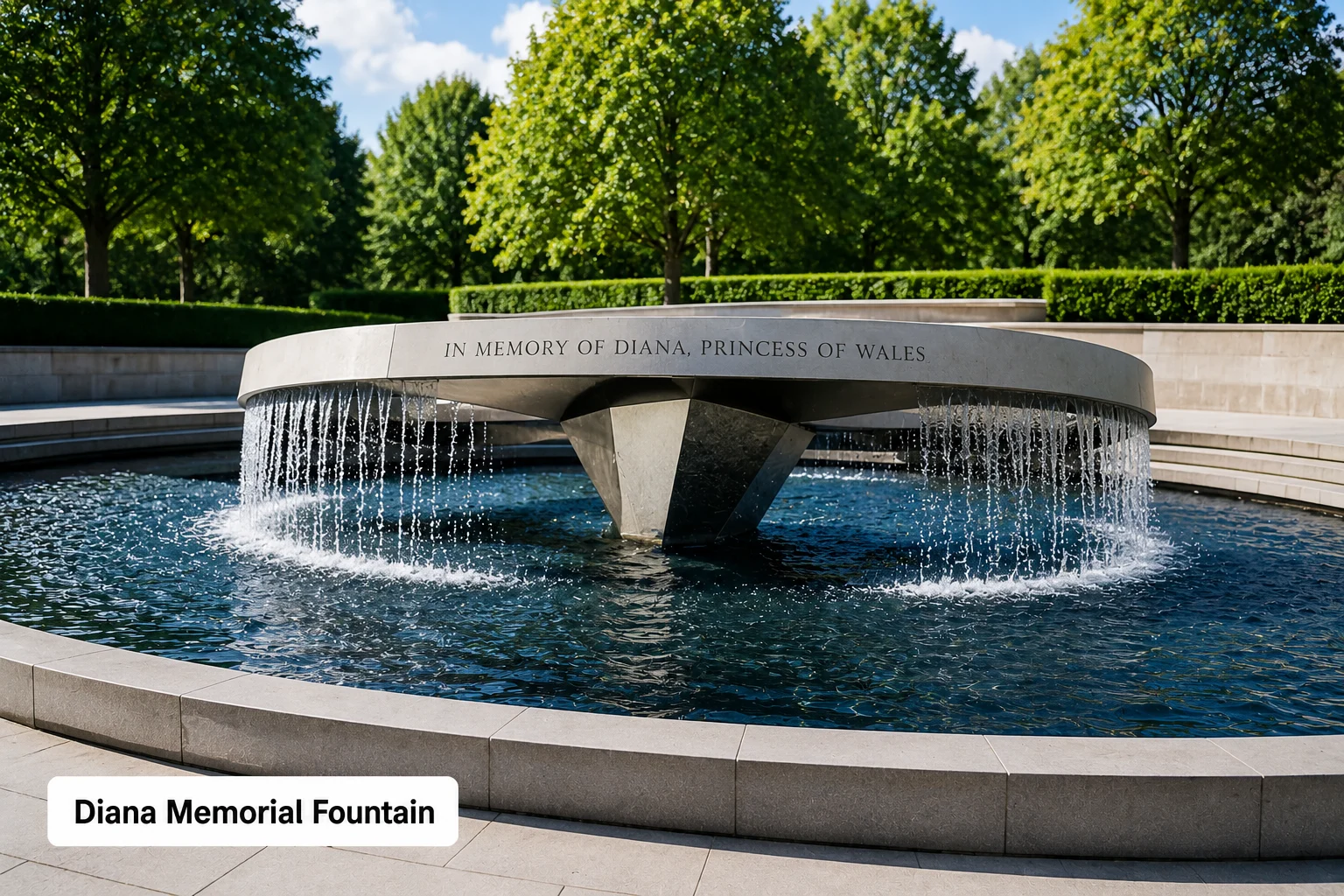
The Legacy of the Diana Memorial Fountain
The fountain has become an important part of Diana’s lasting legacy. It stands alongside other memorials dedicated to her memory, including the Diana Memorial Playground, the Diana Memorial Walk, and the statue unveiled at Kensington Palace.
Reflecting Diana’s Values
The memorial’s inclusive design reflects qualities frequently associated with Diana throughout her life. Rather than celebrating royal status alone, it highlights her compassion, humanity, and connection with ordinary people.
This focus helps explain why the fountain continues to resonate with visitors from around the world.
A Popular London Attraction
Over the years, millions of visitors have explored the memorial. Its location near other major Hyde Park attractions makes it a frequent stop for tourists, while London residents often visit for relaxation and reflection.
The fountain’s blend of architecture, landscape design, and symbolism ensures it remains relevant long after its creation.
Cultural Importance
The memorial represents a shift in how public monuments can be designed. Instead of emphasizing distance and formality, it encourages participation and personal connection.
This innovative approach has influenced discussions about modern memorial design and demonstrates how public spaces can honor historical figures in meaningful ways.
Visiting the Diana Memorial Fountain
The fountain is located in Hyde Park, one of London’s most famous green spaces. It sits near the Serpentine Lake and can be reached easily by public transportation or on foot from nearby attractions.
Visitors can enjoy the memorial free of charge while exploring the surrounding park. Seasonal opening hours may vary, making it advisable to check current information before planning a visit.
The nearby pathways, gardens, and lakeside views make the area ideal for a leisurely walk, providing an opportunity to appreciate both the memorial and the beauty of Hyde Park.
Frequently Asked Questions
Q: Where is the Diana Memorial Fountain located?
A: The fountain is located in the southwest corner of Hyde Park in London, close to the Serpentine Lake and east of the Serpentine Gallery. It is easily accessible from several nearby entrances to the park.
Q: When was the Diana Memorial Fountain opened?
A: The memorial officially opened on 6 July 2004. Queen Elizabeth II led the opening ceremony, which was attended by members of the royal family and Diana’s relatives.
Q: What does the fountain symbolize?
A: The flowing water represents different aspects of Diana’s life. One side of the fountain features calm water, while the other includes more turbulent movement, symbolizing both joyful and challenging experiences.
Q: Who designed the Diana Memorial Fountain?
A: The memorial was designed by landscape architect Kathryn Gustafson and her team. The design focused on accessibility, inclusiveness, and interaction with nature.
Q: Is the Diana Memorial Fountain free to visit?
A: Yes. Visitors can access the memorial without paying an entrance fee, making it one of the most accessible and meaningful attractions in Hyde Park.
Conclusion
The Diana Memorial Fountain is far more than a water feature in a London park. It is a thoughtfully designed tribute that captures the spirit of Diana, Princess of Wales through movement, accessibility, and symbolism. Its flowing waters, open design, and peaceful setting create a space where visitors can reflect on her life and enduring influence.
More than two decades after Diana’s passing, the memorial continues to attract people from around the world. Whether you are interested in royal history, modern architecture, or simply seeking a tranquil place in London, the Diana Memorial Fountain remains one of the city’s most meaningful and memorable landmarks.